
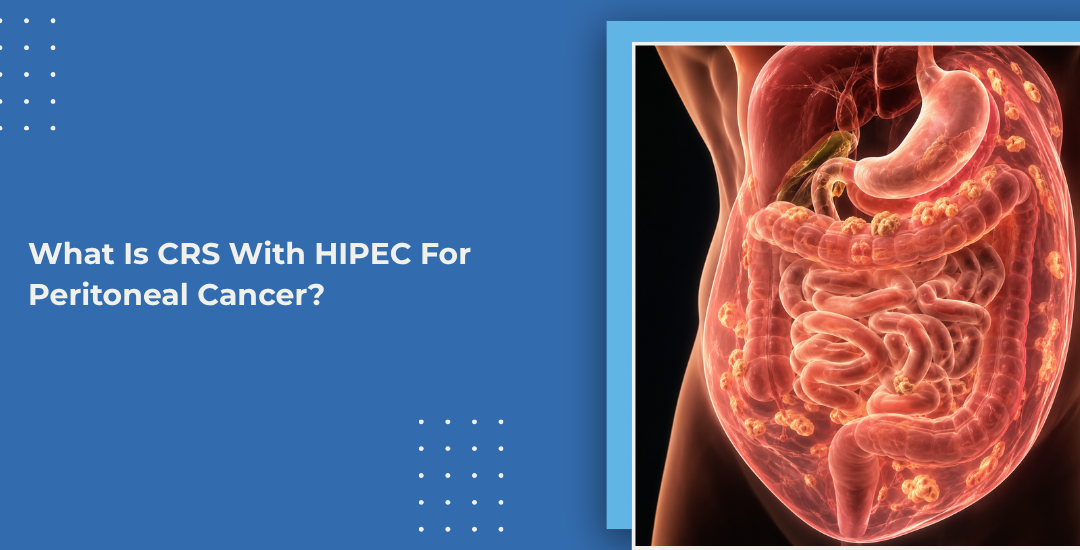
CRS with HIPEC is a two step surgery used for cancer that has spread across the abdominal lining, known as the peritoneum. Surgeons first remove all visible tumour, then circulate heated chemotherapy inside the abdomen for close to an hour to clear cells that surgery cannot reach. It is offered mainly for colorectal, ovarian, gastric and primary peritoneal cancers with limited spread. Outcome depends heavily on patient selection, not the surgery alone.
According to Dr. Anjali Singh, Surgical Oncologist in Bhubaneswar, “CRS with HIPEC only works when disease is contained enough for surgery to clear it. Selection matters more than the procedure itself. Every case is different, and getting the imaging and staging right upfront is what decides whether we can actually offer this to a patient. That groundwork is where the real decision gets made, long before anyone enters the operating room.”
Weighing your options after a peritoneal cancer diagnosis?
How Does CRS With HIPEC Treat Peritoneal Cancer?
The procedure runs in two connected stages within one surgery, and each stage targets cancer cells differently.
Cytoreductive surgery:
All visible tumour is removed from the abdomen, sometimes with affected sections of bowel or the omentum.
Heated chemotherapy:
A solution heated to around 42°C circulates through the abdomen for 60 to 90 minutes, reaching tissue depths standard chemotherapy misses.
Combined timing:
Both steps happen in one operation under one anaesthesia, not across separate hospital visits.
Case dependent:
Not every peritoneal cancer qualifies. Extent of spread decides who is eligible.
Deciding who qualifies takes more than a single scan. Every case goes through a detailed HIPEC treatment evaluation before surgery is even scheduled.
Who Should Consider CRS With HIPEC?
Eligibility depends on cancer type and how far it has spread. Fitness for a long surgery matters just as much.
Colorectal cancer with peritoneal spread:
Considered when disease stays limited rather than scattered widely.
Ovarian cancer:
Sometimes added once peritoneal involvement is confirmed on the operating table.
Gastric cancer:
Offered cautiously, since outcomes depend heavily on disease volume.
Primary peritoneal cancers:
Respond comparatively well, since disease starts in the lining itself.
Recurrence after major abdominal surgery worries most patients, and rightly so. It’s worth reading how colon cancer recurrence after surgery is tracked and managed to set realistic expectations.
Why Choose Dr. Anjali Singh for CRS With HIPEC?
Dr. Anjali Singh holds an M.Ch in Surgical Oncology from JIPMER, with fellowship training in Peritoneal Surface Malignancies, CRS and HIPEC surgery. Her approach relies on careful case selection over fixed protocols. Every plan is reviewed with a multidisciplinary tumour board before a date is confirmed.
Complete cytoreduction is treated as the priority, since incomplete surgery limits how much HIPEC can help. Patients receive a plan built around their specific disease extent, not a standard template.
Call +91 8056885498 to book your consultation.
Frequently Asked Questions
Is CRS with HIPEC a cure for peritoneal cancer?
It aims for long term disease control, not always a full cure.
How long does CRS with HIPEC surgery take?
The combined procedure usually takes between 6 and 12 hours.
Is HIPEC painful to recover from?
Pain is managed actively and improves steadily over two to three weeks.
Can every peritoneal cancer patient get HIPEC?
No, eligibility depends on disease extent, cancer type and fitness.
Reference
- NCBI Bookshelf, StatPearls, Cytoreduction (CRS) and Hyperthermic Intraperitoneal Chemotherapy (HIPEC): https://www.ncbi.nlm.nih.gov/books/NBK570563/
- PMC, Hyperthermic Intraperitoneal Chemotherapy Following Cytoreductive Surgery for Colorectal Peritoneal Carcinomatosis Patients, A Review: https://www.ncbi.nlm.nih.gov/pmc/articles/PMC9744358/
Disclaimer: This is general information, not medical advice. Consult a surgical oncologist for a diagnosis-specific evaluation.