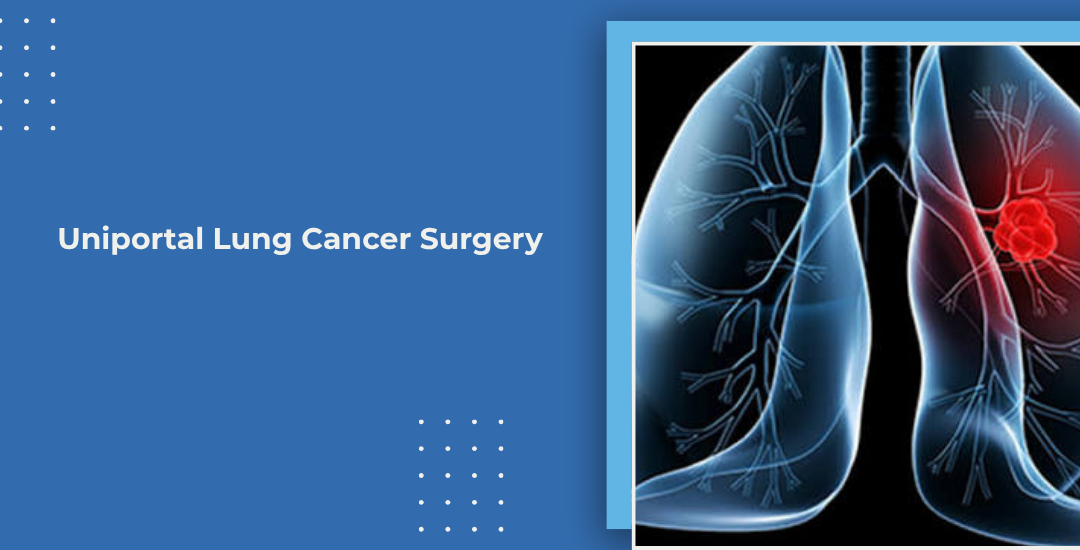
One incision, usually two to four centimetres, is all uniportal thoracic surgery needs. The camera and every instrument go through that same opening, unlike standard video-assisted surgery which spreads three or four ports across the chest wall. It works for early and some locally advanced lung tumours, mediastinal masses, and select pleural cases. One cut instead of several means less chest wall trauma, since fewer intercostal spaces get disturbed in the process.
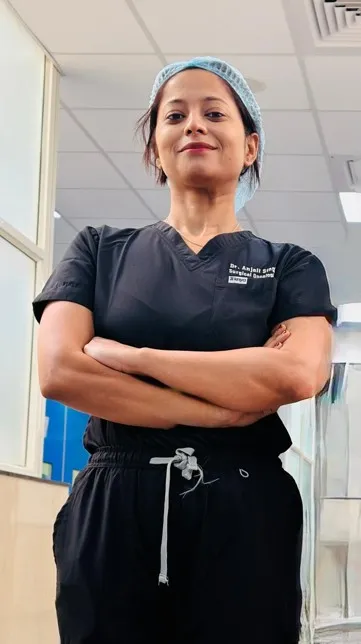
In Dr. Anjali Singh’s opinion as a Lung cancer surgeon in Bhubaneswar , “patients assume it’s about the smaller scar, but the real benefit is how little muscle gets disrupted, and that’s what actually shows up as less pain in the first week.”
Weighing your options for lung tumour surgery?
Why Is Uniportal Surgery Used For Lung Cancer?
Not every tumour qualifies for this. Size, location and how much lung needs removing decide that, not preference.
Less trauma:
One incision skips the extra intercostal cuts that cause most of the lingering pain after standard thoracotomy.
Faster recovery:
Healing one wound beats healing three or four, so patients are usually up and moving sooner than open-surgery patients.
Same clearance:
Worth saying plainly, because people assume smaller means less thorough. It doesn’t. Oncological outcomes match traditional VATS and open surgery when cases are picked correctly
Technical demand:
But it’s harder to pull off. Every stapler, camera and instrument competes for space in one opening, and that takes more surgeon experience than multi-port VATS.
Case selection decides more than the incision count ever will, and Thoracic Oncology is where that selection process actually gets worked out.
What Happens During And After Uniportal Lung Surgery?
Staging comes first. Then anaesthesia, resection, a short recovery stretch, and discharge.
Pre-op staging: CT and PET-CT map the tumour and check nearby lymph nodes or structures before anyone touches a scalpel.
Under anaesthesia: General anaesthesia with single-lung ventilation lets the operated lung collapse, which frees up room for the instruments to actually work.
Resection: Removal ranges from a wedge resection to a full lobectomy, and the extent depends entirely on how advanced the tumour is.
Chest drain: One small drain, usually in for a few days, clears fluid and air until the lung re-expands fully and it can come out.
Hospital stays after uniportal surgery often run three to five days, shorter than open thoracotomy typically allows, and that recovery discipline connects to what’s covered in Colon Cancer Recurrence , where structured follow-up after any cancer surgery ends up mattering just as much long term.
Why Choose Dr. Anjali Singh for Thoracic Cancer Surgery?
Dr. Anjali Singh trained in uniportal thoracic technique at Shanghai Pulmonary Hospital, one of the centres that helped refine it, and holds an M.Ch in Surgical Oncology from JIPMER. Every lung and mediastinal case goes through imaging and tumour board review before a plan gets locked in.
Patients who qualify for uniportal surgery tend to spend less time in hospital and get back to daily life faster than those needing open thoracotomy. Not everyone qualifies, though, and pretending otherwise doesn’t help anyone.
Call +91 8056885498 to book your consultation
Frequently Asked Questions
Is uniportal surgery painful compared to open surgery?
It usually causes less pain since only one incision cuts through the chest wall.
How long is recovery after uniportal lung surgery?
Most patients resume light activity within one to two weeks after discharge.
Can all lung tumours be removed this way?
No, tumour size, location and stage determine whether uniportal surgery is suitable.
Does uniportal surgery affect cancer clearance rates?
No, oncological outcomes match traditional VATS and open surgery in selected cases.
Reference
Disclaimer: This article is for general awareness only and does not replace a consultation with a qualified oncologist.