
A diagnosis of stage 4 does not make treatment no longer possible. A diagnosis of stage 4 cancer indicates that the aim of treatment has changed. Metastatic colon cancer i.e., colon cancer that has metastasized to other organs, is treated differently based on the sites of metastases as well as the characteristics of the tumor at a molecular level. Most patients are given treatment to control cancer in the long term. A smaller subset of patients have limited metastasis and may be eligible for treatment with curative intent.
According to Dr. Anjali Singh’s an experienced surgical oncologist in Bhubaneswar, “stage 4 describes where the disease has travelled, not what can be done about it. Patients with limited liver or lung spread are sometimes still operable, and that should always be checked before it’s ruled out.”
What Symptoms Can Metastatic Colon Cancer Cause?
Symptoms follow the site of spread. Colon cancer usually reaches the liver first, since colon blood drains straight into it, then the lungs, lymph nodes, the abdominal lining, or occasionally bone. Two patients at the same stage can look nothing alike.
What Symptoms Can Metastatic Colon Cancer Cause?
Symptoms depend on where the cancer has spread – some patient has very few

Liver involvement
The most common site of spread.
Tap to read
Right-sided abdominal discomfort, unexplained fatigue, loss of appetite, or yellowing of the skin and eyes (jaundice) if bile flow is affected.

Lung involvement
Second most common site.
Tap to read
A persistent cough, breathlessness on exertion, or chest discomfort that doesn’t resolve with usual treatment.

Distant lymph nodes
Often found on staging scans.
Tap to read
Usually no symptoms on their own — typically picked up incidentally on CT or PET-CT rather than felt by the patient.

Peritoneal spread
Cancer deposits on the abdominal lining.
Tap to read
Bloating, a feeling of fullness after small meals, or visible abdominal swelling from fluid buildup (ascites).

Bone involvement
Less common, but important to flag.
Tap to read
Localised pain that doesn’t ease with rest and may worsen at night, sometimes in the back, hips, or limbs.
Distant lymph nodes
Often found on staging scans.
Tap to read
Usually no symptoms on their own — typically picked up incidentally on CT or PET-CT rather than felt by the patient.
Many patients feel largely fine despite confirmed spread, so disease is often caught on a routine scan, not a symptom. Unexplained fatigue, weight loss, or new pain in anyone with a colon cancer history is worth a review, not a wait.
💡 Quick Fact: The liver is the most common site of spread — colon blood drains directly into it before reaching anywhere else.
Can Metastatic Colon Cancer Be Treated or Controlled?
Yes, though “treated” isn’t one fixed thing. For widespread disease, the aim is control — shrinking or stabilising the cancer and protecting quality of life. Chemotherapy remains the backbone, often paired with targeted therapy or immunotherapy based on the tumour’s genetic profile.
A smaller group, where spread is confined to a resectable part of the liver or lungs, may add surgery to that plan — sometimes aiming for cure. The decision rests on organ involvement, control of the primary tumour, and response so far, which is why a surgical oncology consultation matters before any plan is set.
💡 Quick Fact: BRAF V600E mutations appear in roughly 10% of metastatic colorectal cancers and are matched to a specific targeted therapy combination.
How Is Metastatic Colon Cancer Monitored During Treatment?
Response is tracked through repeat CT or PET-CT scans and blood tests, including CEA, a protein that can rise with active disease. Each scan is measured against the same baseline taken before treatment started.
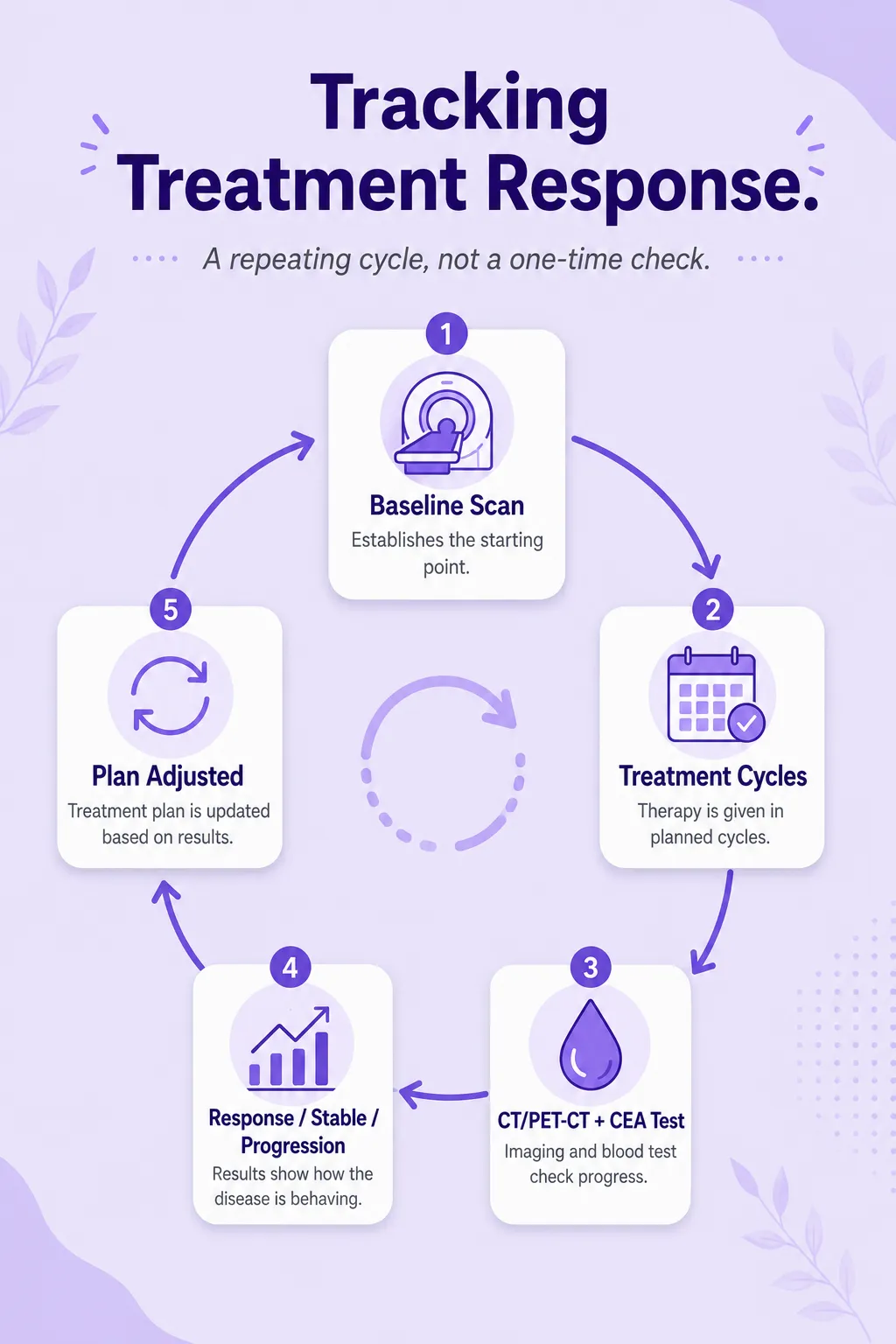
Results fall into three buckets — responding, stable, or progressing — and none are permanent. Disease stable for months can still shrink later, and a regimen that stalls can usually be swapped. It’s the same logic behind tracking recurrence after surgery: scheduled checks, not one-time answers.
💡 Quick Note: One scan showing “stable” isn’t the final word — response is read from the trend, not a single snapshot.
What Does Long-Term Management Look Like After Treatment?
Follow-up doesn’t stop after a good response or successful surgery. Fatigue, neuropathy, or appetite changes are common along the way, and usually manageable with supportive care rather than something to push through alone.
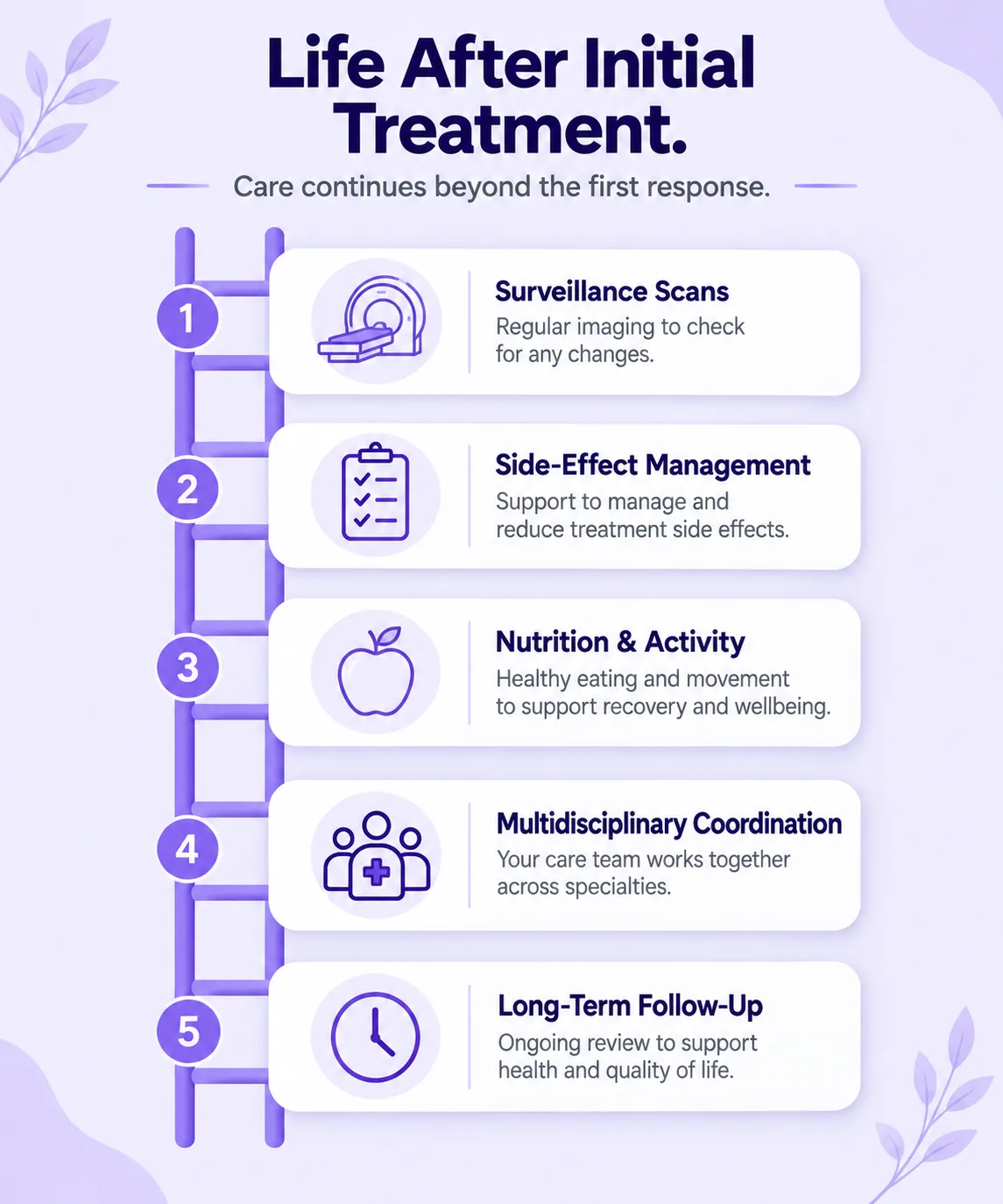
Various organ systems are involved, therefore oncology, surgery, gastroenterology, and radiology usually come together to agree on the plan. Those who are uncertain about the application of these concepts to their cases should prefer an in-person consultation over generic studies..
💡 Quick Fact: Follow-up after metastatic treatment often runs for years, not months, even when the response has been strong.
Takeaway: Metastatic colon cancer stays treatable at every stage — chemotherapy, targeted therapy, and, for some, surgery. What it looks like for one patient depends on details only a full workup can settle.
Frequently Asked Questions
Is there any hope for curing metastatic colon cancer?
For a small group typically with limited spread confined to a resectable portion of the liver or lungs surgery and systemic treatment can be used to try to achieve long-term disease-free survival. Treatment of wider disease is geared towards control.
What is the life expectancy for those who have colon cancer that has spread to other parts of the body?
The response to treatment and spread of the tumour, combined with its nature, is too variable to be predicted by the stage. After a comprehensive consultation, a treating oncologist can discuss patient prognosis.
Can you have surgery once colon cancer has spread?
In some cases when the spread is contained to an area that can be removed (as part of the liver, or lungs, for example) surgery can be used in conjunction with chemotherapy.
Is there a chance to go into remission from metastatic colon cancer?
Yes. A few patients achieve a major or complete response, where there is no disease visible on scans. This is carefully monitored as it does not constitute a cure.
What determines a doctor's choice of treatment for a patient?
On location and spread, tumour genetic markers, previous treatment, health status – examined at a multidisciplinary tumour board.
References
- American Cancer Society. “Colon Cancer Treatment, by Stage.” https://www.cancer.org/cancer/types/colon-rectal-cancer/treating/by-stage-colon.html
- National Cancer Institute. “Colon Cancer Treatment (PDQ®) – Health Professional Version.” https://www.cancer.gov/types/colorectal/hp/colon-treatment-pdq