
Colon cancer coming back after ten years is rare, but it does happen. Most recurrences show up within five years of treatment, and only a few patients face late recurrence, when the cancer returns long after they were told they were cancer-free. After a decade in the clear, news like this can feel devastating for the patient and the whole family.
The reassuring part is that regular follow-up helps to identify most returns early, while they’re still very treatable. Knowing why it happens, and what to watch for, keeps you a step ahead.
According to Dr. Anjali Singh, an experienced Surgical Oncologist in Bhubaneswar, “Even after ten clear years, a few stray cancer cells can stay dormant and reactivate, which is why long-term follow-up still matters.”
Colorectal Cancer Treatment in Bhubaneswar
Late recurrence usually comes down to a few cells that were never fully cleared, even when the scans and tests looked clean. So what’s really happening?
Dormant cancer cells
Some cells survive treatment and just go quiet for years. They don’t grow or show up on scans. Then something wakes them, and they start dividing again.
Micro-spread nobody could catch
Tiny clusters may have already moved to the liver, lungs or lymph nodes before the first treatment. Too small to find back then.
The tumour's own nature
Some colon cancers are more aggressive by default. It depends on their genetics and how far along they were when first found.
An immune system that's slowed down
Your body usually keeps stray cells in check. As it weakens with age or illness, those sleeping cells get their chance.
So late recurrence isn’t a new cancer starting from zero. Most of the time it’s the original disease coming back from cells that stayed hidden for years. That’s the reason doctors keep watching, even after a long stretch with no sign of trouble.
If you’ve had colon cancer before, regular follow-up checks help diagnose any return early
Colorectal Cancer Treatment in Bhubaneswar
Late recurrence usually comes down to a few cells that were never fully cleared, even when the scans and tests looked clean. So what’s really happening?
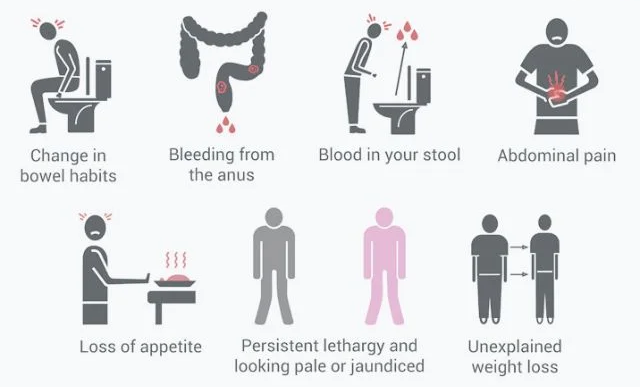
Blood in the stoo
Bright red or very dark blood, or stools that look black, can point to bleeding somewhere in the digestive tract.
Changes in bowel habits
Diarrhoea, constipation, or a thinner stool that sticks around for more than a few weeks is worth mentioning.
Bleeding from the anus
Fresh blood during or after a bowel movement shouldn’t be brushed off, even if it seems minor.
Abdominal pain
A dull ache or discomfort in the belly that keeps coming back deserves a closer look.
Loss of appetite
Not feeling like eating, or getting full faster than usual, can be an early clue.
Unexplained weight loss
Dropping weight without trying is one of the more common red flags.
Belly pain or cramping that won't settle
Ongoing cramps, bloating or a heavy, full feeling can signal a problem nearby.
Now, before you panic, most of these have everyday causes too. A rough week of digestion isn’t a diagnosis. But if you’ve had colon cancer before and any of these stick around for more than two or three weeks, get them checked. Better to check and feel silly than to wait and wonder.
Where Does Colon Cancer Usually Recur?
When colon cancer comes back, it often doesn’t return to the colon itself. It can show up in other parts of the body instead, which is why follow-up checks look beyond where it first started.
The liver
This is the most common spot. Blood from the colon flows through the liver, so cancer cells reach it easily.
The lungs
A close second. These are often caught on a routine chest scan during follow-up.
Nearby lymph nodes
Cancer can come back in the lymph nodes close to where the tumour first formed, or in the belly.
The peritoneum
This is the lining of the belly. A return here can cause fluid buildup and swelling, and it needs specialised surgery.
This is why follow-up isn’t just about a colonoscopy and is done. Blood tests, CT scans and tumour marker checks all work together to find a return wherever it tries to hide. That same careful, whole-belly attention is required in colorectal cancer treatment. This is what helps diagnose it early and deal with it.
Treatment Options When Colon Cancer Returns After 10 Years?
Cancer returning after so many years is scary, no doubt about it.
Treatment has improved a lot, and many late recurrences can be handled with the aim of long-term control, sometimes even a cure.
Surgery
If the cancer comes back in just one spot, like a single area in the liver or lung, taking it out surgically often gives the best result.
Chemotherapy
This can be used on its own or with surgery, to shrink the tumour and clear cells that can’t be removed.
Cytoreductive surgery with HIPEC
When cancer returns in the lining of the belly, this special surgery removes what’s visible and then washes the area with heated chemotherapy.
Targeted therapy and immunotherapy
These newer treatments go after specific features of the cancer and can help when the usual approaches aren’t enough.
The right plan depends on where the cancer returned, how much there is, and your overall health. A specialist in complex abdominal cancers can weigh all of it and guide you to what suits you best. A return like this calls for experience, and the choices you have today are better than ever.
Any lasting symptom after past treatment should be checked without delay.
When Should You Consult a Doctor?

If you’ve had colon cancer before, don’t skip your follow-up appointments, even after ten clear years. See a specialist if you notice lasting changes in your bowel habits, blood in your stool, unexplained weight loss, or belly pain that won’t settle. Catching a recurrence early gives you the most treatment options and the best chance of beating it again.
Frequently Asked Questions
Can colon cancer really come back after 10 years?
Yes, though it’s uncommon. Most recurrences happen within five years of treatment.
What is the most common site of colon cancer recurrence?
The liver is the most common site, followed by the lungs and lymph nodes.
How is late recurrence of colon cancer detected?
Through follow-up colonoscopy, CT scans, blood tests, and tumour marker checks over time.
Can recurrent colon cancer be cured?
Often yes, especially when caught early and treated with surgery, chemotherapy, or both.