
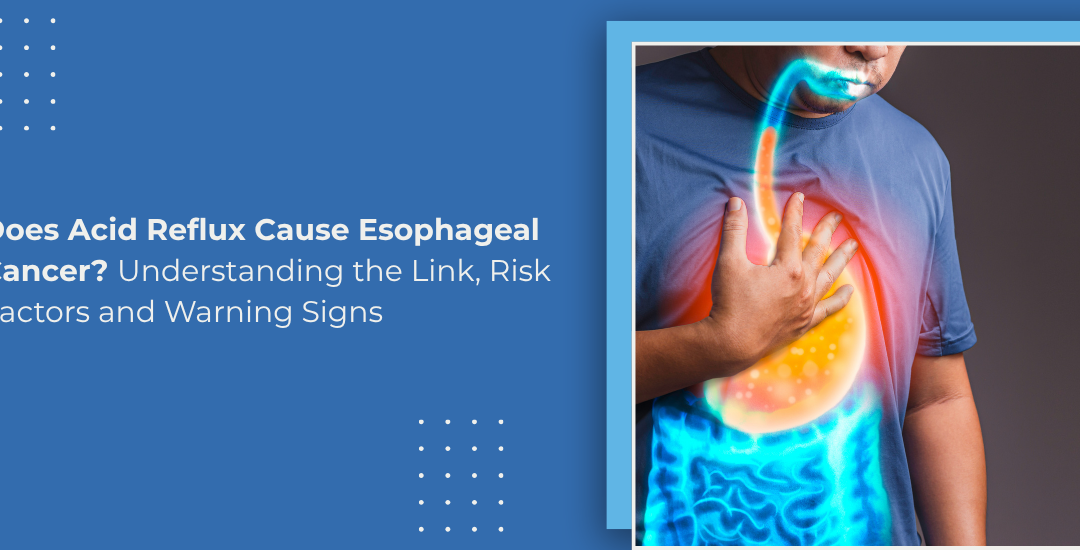
Yes, long-term untreated acid reflux can lead to esophageal cancer. Occasional heartburn after a heavy meal is common and harmless. The concern is reflux that continues for years. When stomach acid repeatedly washes back into the esophagus, it damages the cells lining it. Over time, this damage can lead to a precancerous condition called Barrett’s esophagus, where those cells may eventually develop into a type of cancer known as esophageal adenocarcinoma.

According to Dr. Anjali Singh, GI and Thoracic Surgical Oncologist in Bhubaneswar, “Reflux that lasts for years slowly damages the lining of the food pipe, and it’s this long-term irritation, not the occasional heartburn, that we watch closely.”

Why Does Acid Reflux Increase the Risk of Esophageal Cancer?

The link comes down to what acid does to the lining of your food pipe when it keeps washing back up. Here’s how the damage builds.

    Constant irritation

    Acid coming up again and again inflames the lining. Over the years, that inflammation stops being a small thing.

    Barrett's esophagus

    When the lining takes damage for long enough, the cells start to change. This condition is the main link between reflux and cancer.

    Changes that go further

    In a small number of people with Barrett’s, those changed cells keep changing, and some eventually turn cancerous.

    Damage you can't feel

    Not everyone with reflux gets bad heartburn. The damage still builds quietly, so symptoms alone don’t tell the full story.

    So reflux isn’t cancer. It’s the years of irritation, and the cell changes that follow, that create the risk. The good news is that this happens slowly. That leaves plenty of time to catch it and do something about it.

    If heartburn has been part of your routine for years, it’s worth getting the lining of your food pipe checked.

    If reflux has been part of your life for years, a simple check-up is worth booking. 

    Who Is at Greater Risk of Developing Esophageal Cancer?

    Reflux is only one piece of the puzzle. Certain factors stack the odds, and knowing where you stand helps you and your doctor decide how closely to watch.

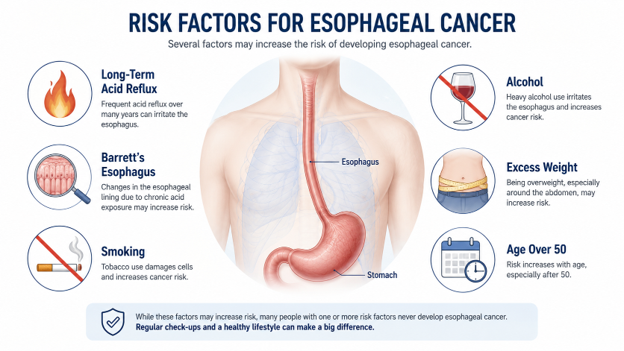
    Long-standing reflux or GERD

    Symptoms lasting more than five years, especially several times a week, carry more weight than the occasional flare.

    Barrett's esophagus

    A confirmed diagnosis means regular monitoring, since this is the clearest precursor condition.

    Smoking and alcohol

    Both damage the lining directly and multiply the risk when combined with reflux.

    Being overweight, especially around the middle

    Extra abdominal weight pushes stomach contents upward, making reflux worse and more frequent.

    Age and sex

    Risk rises after fifty, and men develop esophageal cancer more often than women.

    A diet low in fruits and vegetables

    Long-term eating patterns play a part, though not as strongly as smoking or obesity.
    Having one or two of these doesn’t mean cancer is coming. It just means it’s worth mentioning them to your doctor. And this is where an upper GI endoscopy earns its place. It lets the doctor look directly at the lining of your food pipe, spot changes like Barrett’s esophagus early, and take a small tissue sample if anything looks off. For anyone ticking several of these boxes, that simple test is often the clearest way to catch trouble before it grows.

    Warning Signs That Should Never Be Ignored

    Early esophageal cancer often causes no symptoms at all. When signs do appear, they’re easy to explain away as something else. That’s the trouble with it.
    Trouble swallowing

    Food feeling stuck, or needing water to push it down. This is the most important sign, and it needs attention straight away.

    Pain or discomfort when swallowing

    A burning or catching sensation as food passes through.

    Unexplained weight loss

    Losing weight without trying, often because eating has become difficult.

    Heartburn that suddenly changes

    Reflux that worsens, or stops responding to medicines that used to work.

    A hoarse voice or persistent cough

    Less common, but worth mentioning if it lingers.

    Vomiting or bringing food back up

    Especially when it happens repeatedly.
    Difficulty swallowing is the one sign you should never wait on. Most causes turn out to be harmless, but this symptom deserves a prompt look, not a wait-and-see approach.

    How to Lower the Risk of Esophageal Cancer if You Have Chronic Acid Reflux

    Here’s the practical part. Reflux is manageable, and managing it well genuinely lowers your risk over time.

    Treat the reflux properly

    Medicines that reduce acid, taken as prescribed, protect the lining. Don’t stop them just because the burning eased.

    Get screened if you have Barrett's

    Regular endoscopy catches cell changes early, when they’re easiest to treat.

    Lose weight if you're carrying extra around the middle

    Even a modest drop reduces the pressure pushing acid upward.

    Eat more fruits and vegetables

    A simple change, but the evidence supports it.

    Quit smoking, cut back on alcohol

    Both are strong, independent risk factors, and stopping helps at any age.

    Adjust your evening routine

    Avoid eating within three hours of lying down, and raise the head of your bed slightly.
    None of this guarantees anything. What it does is shift the odds in your favour, and for a condition that develops over years, that shift matters. Talk to your doctor about which steps make the most sense for you.

    When Should You Consult a Doctor

    See a doctor soon if you have trouble swallowing, if food feels stuck, or if you’re losing weight without trying. Book a check-up if your heartburn has gone on for more than five years, has recently got worse, or no longer settles with your usual medicines. And if you’ve been diagnosed with Barrett’s esophagus, keep up with your scheduled endoscopies, even when you feel perfectly fine.

    The appointment itself is nothing to dread. Your doctor will ask how long the symptoms have been around and what makes them better or worse. If reflux has been going on for years, an endoscopy is usually the next step. A thin, flexible camera takes a look at the lining of your food pipe, and a small tissue sample can be taken if anything looks off. It only takes a few minutes, and you’ll be sedated throughout.

    Trouble swallowing or unexplained weight loss should be checked without delay.

    Frequently Asked Questions

    Does acid reflux always lead to esophageal cancer?

    No, it doesn’t. Most people with reflux never develop cancer. But when reflux goes on for years, it does raise the risk.

    What is Barrett's esophagus?

    It’s a condition where years of acid damage slowly change the lining of your food pipe. Doctors watch it closely because it can lead to cancer.

    What is the earliest warning sign of esophageal cancer?

    Trouble swallowing. If food feels stuck or hard to get down, don’t wait. See a doctor soon.

    Can treating acid reflux reduce cancer risk?

    Yes. Keeping reflux under control helps, and if you have Barrett’s esophagus, regular check-ups lower your long-term risk.
    Powered by Joinchat
    Call Now Button